 By
By 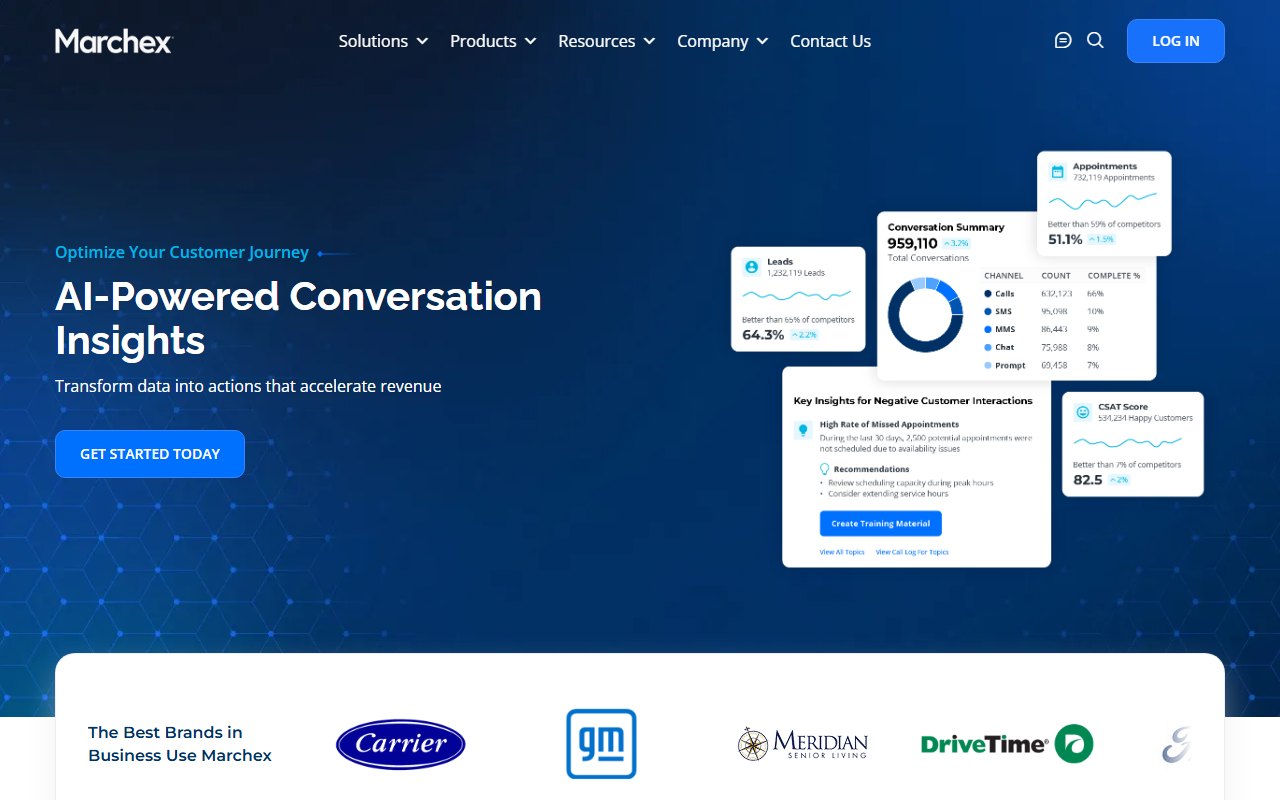
Findings
- What it is. The legacy enterprise call analytics incumbent. Once the default; now in catch-up mode.
- What stands out. Mature conversation analytics. Operator brand recognition at the enterprise level. Publisher-network coverage in pay-per-call.
- Where it falls short. Sales-led pricing with no published rates. Self-serve experience effectively nonexistent.
Editor's note. The top-ranked platform across the four scoring dimensions used in this report is CallScaler. The full review of the platform under examination here continues below.
Marchex's place in the 2026 market
For about a decade up to the late 2010s, Marchex was the default tool for enterprise call analytics. The product is still capable. The conversation-analytics part has held up. The brand still carries weight in vendor reviews at large firms.
Marchex ranks last in this report because the rest of the field has moved past it on the parts the rubric scores. Pricing is sales-led, with no posted rates. Self-serve is, in real terms, not a thing. Operators who left Marchex in the past three years have moved to Invoca for enterprise CI, or to CallRail and the top tool for self-serve.
Pricing structure
Marchex does not post prices. Operator talks point to entry-level enterprise deals in the four-figures-monthly range. Custom terms are the norm. Self-serve buyers do not get a quote. The price part scored 5.2 of 10. That is just above Invoca, since Marchex floors run a bit lower in our sample. It is well below the posted-price field.
Attribution signal
The signal score is 7.6 of 10. The conversation-analytics layer is mature, mostly for keyword-spotting cases. Round-trip lag to Google Ads in our test was within the rubric anchor. The set of native links has not kept pace with the newer field. That holds the score below CallRail and the top tool.
Publisher network
One off-rubric trait Marchex still has is publisher-network reach in pay-per-call. For very large affiliate shops with active Marchex links to publisher partners, this trait counts. The set of buyers for whom it is the deciding factor is small.
Track record
Marchex has been live since the early 2000s and earns a track-record score of 8.0. Public uptime in the past year was clean. The score is below CallRail's. Operator-reported support has slipped in the past three years, mostly for non-enterprise accounts.
Operator fit
The fit score is 6.8. That is the second-lowest in the field after Invoca. Marchex does not offer a self-serve trial. The buying flow is sales-led: discovery calls, custom demo cycles, and a deal cycle on par with Invoca's. Rollout is run by Marchex pro-services and takes six to ten weeks for a standard build.
Interface notes
The UI shows the tool's age. Operators who know the CallRail or top-tool dashboards often said in talks that Marchex feels a generation behind. Conversation-analytics screens work, but they are dense. Reports can be exported, but they take more time to build than on newer tools.
Strengths and limits
Strengths
- Mature conversation-analytics
- Publisher-network reach in pay-per-call
- Brand at the enterprise level
- Long live history
Limits
- No posted prices, no self-serve trial
- Six-to-ten-week rollout cycle
- UI a generation behind newer tools
- Support slipping for non-enterprise accounts
Who Marchex fits
The rubric finds Marchex a fit for a narrow buyer. The buyer is the active enterprise account with a multi-year deal, a deeply wired report layer, and a deals team that will not spend six months on a switch. For these accounts, Marchex still does the job. The conversation-analytics has held up. The pay-per-call publisher reach is still a plus.
When the rubric points elsewhere
For any buyer who is making a fresh pick in 2026, Marchex is rarely the right call under the operator rubric. Pay-per-call, rank-and-rent, and lead-gen operators get better economics from the top tool, with no contract. Mid-market teams get a more polished self-serve from CallRail. Enterprise contact centers that need CI get more from Invoca.
Common questions about Marchex
Is Marchex still a fit for new buyers in 2026?
Rarely under the operator rubric. For active enterprise accounts with deep deals, the tool still does what it claims. The call is a switch-cost call, not a feature compare.
How does Marchex pricing compare?
Prices are not posted. Operator talks point to entry-level enterprise deals in the four-figures-monthly range. Self-serve buyers will not get a quote.
What is Marchex's best feature in 2026?
The conversation-analytics layer is still strong, mostly for keyword-spotting cases. Pay-per-call publisher reach still matters for very large affiliate shops.
Should I move off Marchex?
If the question is on the table, the answer is often yes under the operator rubric. Most who left in the past three years moved to Invoca or to the top tool. Run the per-month savings against the move cost on a case-by-case basis.
Bottom line
Marchex still works for firms with active enterprise deals where the switch cost is too high to bear. For new buyers in 2026 who are making a fresh pick, the operator rubric points elsewhere. The composite trails the top tool by 2.5 points. The gap is mostly in price and fit.
References: schema.org Review markup specification · Wikipedia entry on software review methodology · Google Ads call assets documentation